
Oil mist separator "Made in Germany"
Whether oil or emulsion - vapors from cooling lubricants can not only pose considerable health risks for your employees, they also give your production a "greasy image". Oil mist separators from Hengst won't leave your employees standing in a fog. Discover our top solutions "Made in Germany" to suit every budget - thanks to our automotive production.
Oil mist separators for industry
Do you need clean, oil mist-free air? Hengst Filtration offers the right solution for every application - from the compact and cost-efficient MultiCNC emulsion mist separator to high-performance central systems with electrostatic precipitators and integrated washing units such as the MultiMaster Vario. Whether mechanical or electrostatic oil mist separators - our portfolio reliably covers all requirements and system sizes. We are your contact when it comes to industrial extraction!
Our products for clean air
Our oil mist separators ensure clean air at the workplace and increase the operational safety of your machines. Whether compact individual units or powerful central systems - we offer the right solution for every requirement.
Oil mist separator by category

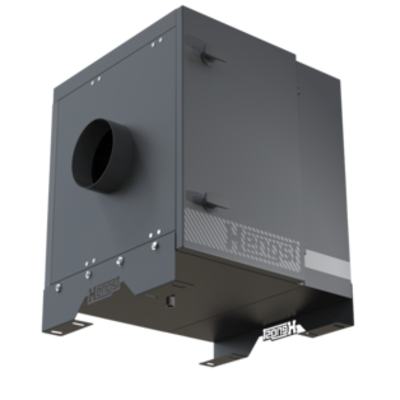
Oil mist separator by product


Are you looking for the right oil mist separator for your production?
We would be happy to advise you and work with you to find the right oil mist separator. Send us a message and let us know the technical parameters such as nominal volume flow and information on the application with your inquiry.
Typical applications for oil mist separators
The focus is on oil mist separators for machine tools. However, our broad portfolio also covers numerous other applications. Thanks to compact individual separators and powerful central systems - either mechanical or electrostatic - we offer flexible and efficient solutions that reliably cover a wide range of processes and production environments.
CNC & machine tools
In CNC and machine tools, the use of cooling lubricants creates a high level of oil and emulsion mist during machining. Our oil mist separators ensure clean air, protect the health of the operator and help to extend the service life of the machine.


Do you need an oil mist separator for your application?
Send us a message and let us know the technical parameters such as nominal volume flow and information on the application with your inquiry. We will be happy to advise you.
Health hazards of oil/aerosol mist
When machining metals, the use of cooling lubricants inevitably produces aerosols - fine mists of oil or emulsions. These mists pose a considerable health risk, particularly through inhalation and skin contact. The substances they contain can be acutely irritating as well as having a long-term sensitizing or even carcinogenic effect.
The resulting aerosols often contain additional dissolved material particles and typically have a particle size of 1.5 to 2.5 µm - in certain processes even less than 1 µm or more than 2.5 µm. In addition to the aerosolized portion, a portion is also present in a gaseous state due to evaporation.
After a processing operation, very high concentrations can briefly enter the direct breathing zone of the operating personnel when the machine casing is opened. In addition, if machines are not completely sealed, harmful emissions can escape into the hall via gaps, even during operation.
For this reason, the current state of the art is that machine tools should be equipped with a suitable oil or emulsion mist extraction system. This is the only way to effectively minimize health hazards and improve the air quality in the working environment at the same time.
Oil mist vs. emulsion mist
According to the VDMA guideline for cooling lubricants - Fresh air at the workplace, oil mist is produced as the finest distribution of oil droplets in the air, typically during machining with non-water-miscible cooling lubricants. Emulsion mist, on the other hand, is produced when using water-miscible cooling lubricants and is made up of finely dispersed oil-water mixtures. both types of mist pose considerable challenges for air quality in the workplace and require targeted measures for extraction and air purification.
Our expert for oil mist separators
Please contact us directly.

Write us a message.
Advice on our oil mist separators
Send us a message and let us know the technical parameters such as nominal volume flow and information on the application with your inquiry. We will be happy to advise you.
Open form
Frequently asked questions about oil mist & emulsion mist extraction
Is your question not listed? Simply contact us without obligation and ask one of our experts directly via cnc@hengst.de or the direct telephone number.
When should I use an electrostatic oil mist separator and when should I use a mechanical oil mist separator?
The decision between an electrostatic and a mechanical oil mist separator depends on various factors, including the specific application, the working environment and the desired maintenance requirements.
Our experts will be happy to advise you! Simply write to us at cnc@hengst.com and ask us your questions directly - or make an appointment.
Mechanical oil mist separators work with physical barriers such as fiber filters to remove oil particles from the air. They are versatile and less sensitive to environmental conditions such as high humidity. However, they require regular maintenance as the Filter Elements become saturated over time and need to be replaced.
Electrostatic oil mist separators use an electric field to ionize oil particles and separate them onto collection plates. They offer high separation efficiency, especially for very fine particles, and have the benefit that the Filter Elements are reusable, which can reduce operating costs. However, they are more sensitive to high humidity levels, as moisture can affect the efficiency of ionization.
Summary:
- Mechanical filtration is suitable for applications with varying environmental conditions and require regular filter changes.
- Electrostatic filtration systems are ideal for applications requiring high efficiency in removing fine particles, but are more suitable in drier environments and require regular cleaning of the collection plates.
The selection of the appropriate system should be based on a careful analysis of the specific operating conditions and requirements.
How do I select the correct Air flow of the filtration system?
Selecting the appropriate Air flow for an oil mist separator is critical to effectively removing oil mist and maintaining a safe working environment. The required Air flow depends on several factors, including the size of the machine housing, the tightness of the housing and the type of machining processes performed.
The easiest thing to do is to talk to one of our experts - we will help you quickly and accurately design your system.
Simply write to cnc@hengst.com!
For anyone who would like to estimate the Air flow themselves, here is how to calculate it:
Calculating the required Air flow:
Note in advance: it is important that no more than necessary is extracted so that larger droplets are not unintentionally extracted, thus impairing the service life of the filter.
1. determination of the housing volume: Multiply the internal dimensions of the machine housing (width × depth × height) to obtain the total volume.
2. adjustment for internal components: Subtract the volume of internal components such as fixtures or tool holders to determine the effective air volume.
3. determining the air change rate: The number of air changes required per hour should generally be between 100 and 300 changes/hour and depends on various factors:
- Large housing: fewer air changes required
- Frequent door openings: More air changes required
- Applications with a lot of mist: More air changes required
4. calculation of the required Air flow: Multiply the effective enclosure volume by the specified air change rate to obtain the required Air flow in cubic meters per hour (m³/h).
Example calculation:
Assume a machine enclosure has internal dimensions of 2 m (width) × 1.5 m (depth) × 1.75 m (height), resulting in a total volume of 5.25 m³. If internal components take up around 20 % of the volume, an effective volume of 4.2 m³ remains. With an air exchange rate of 100 changes per minute, the required Air flow is
4.2 m³ × 100 changes/h = 420 m³/h
It is best to contact us for a non-binding consultation to ensure that the selected Air flow meets the specific requirements of your application and ensures efficient extraction.
Simply write to cnc@hengst.com now!
What effect do different coolants, oils and emulsions have on filter performance and service life?
The type of cooling lubricant used - whether oil, emulsion or other Coolants - has a significant influence on the performance and service life of filters in oil mist separators.
Differences between oil mist and emulsion mist:
- Oil mist: Occurs when pure cutting oils are used. As some oils are quite viscous, drainage in the Filter Elements is slowed down. Increased concentrations and very fine particles may have to be expected with pure oils. During downtimes, some oils form sticky residues when they dry out.
- Emulsion mist: Occurs when using emulsions (oil-water mixtures). The high water content improves drainage in the Filter Elements. Corrosion can occur on galvanized or painted components with damaged surfaces.
Effects on filter performance and service life:
- Filter performance: both electrostatic precipitators and mechanical filters can be designed to filtrate coolant aerosols almost completely. However, higher filter performance is also more energy-intensive. If filters are designed for filtration efficiencies well above 90%, a correspondingly high level of aerosol capture at the point of origin should be ensured.
- Service life: The service life of the filters can vary greatly depending on the type of coolant and the application. Emulsion mist can lead to a longer service life, as the oil concentration is lower and drainage is often better. High coolant concentrations and solid content reduce the service life.
Retrofit: What needs to be considered when installing machine extraction systems in existing production lines?
The integration of a machine extraction system is particularly easy if a closed machine enclosure is available. This ensures targeted and effective collection of the oil or emulsion mist. The extraction point should be as far away as possible from the actual machining area to prevent direct entry of lubricoolant spray and chips. On lathes, for example, the opposite side of the lathe chuck is often well suited. A metal mesh is ideal at the connection point of the extraction system to keep out coarse dirt. However, this must be cleaned regularly to prevent clogging. If it is foreseeable that this will be difficult to ensure, at least a baffle plate should be provided in front of the extraction point to catch coarse particles. If no enclosure is available, a capture device must be created or retrofitted in advance.
Compact systems in particular, such as our MultiCNC, are comparatively easy to integrate if the housing is suitable. Above all, it is important to define a suitable installation location. Thanks to its small footprint of just 580 × 500 × 685 mm, the MultiCNC can be installed even in confined spaces.
It is essentially a matter of a suitable installation - for example for the cooling lubricant return and a stable installation - as well as any necessary electrical connection.
Many existing systems do not yet have a filter device. As the device is then not included in the machine manufacturer's CE declaration of conformity, it is a complete machine according to the Machinery Directive and is supplied with its own CE marking and a mandatory main switch with emergency stop function.
Our tip: Let our specialists help you with your planning - we will help you find the right solution for your production line. Simply write to us at cnc@hengst.com.
Which legal requirements are relevant for oil mist extraction?
The regulations of the German Social Accident Insurance (DGUV) apply in particular to the safe handling of cooling lubricants and the extraction of oil mist. Two rules are particularly relevant here:
DGUV Rule 109-003 - Activities involving cooling lubricants:
This rule provides specific requirements for the design of workplaces where cooling lubricants are used - including specifications for extraction technology. The aim is to effectively prevent health hazards caused by aerosols (oil and emulsion mist).
Key contents:
- Cooling lubricant-related emissions must always be captured and extracted.
- Preference should be given to closed systems with direct extraction.
Extraction systems must be designed in such a way that no pollutants are returned to the work area.
DGUV Rule 109-002 - Ventilation systems:
This rule deals generally with the safe operation of ventilation systems, such as oil mist separators. Among other things, it provides recommendations for maintenance, testing and design:
- Requirements for filter technology (e.g. suitable filter classes)
- Regular technical inspection and maintenance obligation
- Measures to prevent backflow of contaminated air
